
The European defense landscape is undergoing a profound transformation, driven by an accelerating geopolitical realignment and a renewed imperative for robust security architectures. In this dynamic environment, the demand for specialized, authoritative analysis of defense policy, procurement, and strategic developments has never been more acute. Responding to this critical informational need, a prominent transatlantic defense media organization is poised to launch a significant new European defense intelligence platform in early May. This dedicated pan-European defense news venture aims to provide granular coverage and incisive commentary on the continent’s evolving security challenges, defense industrial base, and strategic partnerships, marking a pivotal moment in the specialized defense media ecosystem.
At the helm of this ambitious undertaking will be Tim Martin and Elisabeth Gosselin-Malo, who are set to serve as co-editors. Their leadership signals an intent to deliver comprehensive, in-depth reporting tailored to the intricacies of European defense, a domain characterized by diverse national doctrines, complex multilateral initiatives, and a rapidly changing threat perception. The timing of this launch is particularly salient, occurring amidst Russia’s ongoing war of aggression in Ukraine, the subsequent revitalization of NATO, and an intensified debate within European capitals regarding strategic autonomy and burden-sharing. Such an initiative underscores the growing recognition that the European theater requires a distinct, focused journalistic lens to accurately capture its nuances and inform its stakeholders.
For decades, the transatlantic alliance has been the bedrock of European security, with the United States playing an indispensable role as the primary security guarantor. However, the post-Cold War era saw a gradual decline in European defense spending and a corresponding atrophy of certain capabilities, predicated on the assumption of enduring peace and a stable geopolitical order. The events of the past several years, culminating in the full-scale invasion of Ukraine in February 2022, shattered this complacency, forcing a radical reassessment of defense priorities across the continent. Nations that had long underinvested in their militaries are now embarking on ambitious modernization programs, increasing defense budgets, and actively seeking to enhance interoperability with NATO allies. This surge in activity generates a corresponding demand for reliable, detailed information on procurement decisions, technological advancements, strategic partnerships, and the overarching policy frameworks that govern them.
The information battlespace is as critical as the physical one, particularly in an era of hybrid warfare and pervasive disinformation. Specialized defense journalism plays an indispensable role in this environment, serving as a vital conduit for accurate information, critical analysis, and informed debate among policymakers, military professionals, industry leaders, and academic circles. A dedicated European platform, backed by an established transatlantic media group, is uniquely positioned to cut through the noise, providing clarity on complex issues ranging from multi-domain operations and integrated air and missile defense to cyber resilience and space-based capabilities. It can illuminate the strategic implications of decisions made in Brussels, Paris, Berlin, Warsaw, and other European capitals, offering insights that are often lost in general news reporting. This focused approach is particularly crucial for American defense stakeholders, who require a nuanced understanding of European security dynamics to effectively navigate alliance politics, inform foreign policy, and identify opportunities for defense industrial collaboration.
One of the central themes dominating European defense discourse is the tension between fostering “strategic autonomy” and reinforcing “transatlantic solidarity.” Historically, efforts towards greater European defense integration have ebbed and flowed. Initiatives like the Western European Union (WEU) and the European Security and Defence Policy (ESDP), which later evolved into the Common Security and Defence Policy (CSDP), have sought to develop indigenous European military capabilities and decision-making processes independent of, or complementary to, NATO. More recently, the Permanent Structured Cooperation (PESCO) framework and the European Defence Fund (EDF) represent renewed efforts to synchronize national defense planning, pool resources, and collaboratively develop critical military equipment.
Proponents of strategic autonomy argue that Europe must be capable of acting independently when American interests diverge or when the United States is preoccupied with other global challenges. This sentiment has been amplified by past US administrations’ rhetoric questioning the value of alliances and European burden-sharing. Conversely, staunch transatlanticists emphasize that NATO remains the indispensable cornerstone of collective defense, and that European efforts should primarily aim to strengthen the alliance rather than create redundant structures. A dedicated European defense news platform can meticulously track and analyze these intricate debates, examining how they influence defense procurement, force generation, and strategic deployments across the continent. For American observers, understanding the nuances of this internal European dialogue is paramount for maintaining a cohesive and effective transatlantic alliance.
The leadership of Tim Martin and Elisabeth Gosselin-Malo as co-editors for this new venture is indicative of the seriousness with which this expansion is being approached. While specific biographical details for the purpose of this article are not available, in such critical editorial roles, individuals typically bring a wealth of experience in defense reporting, an intricate understanding of geopolitical dynamics, and a robust network within military, governmental, and industrial circles. Their combined expertise will be crucial in steering the platform’s editorial direction, ensuring the delivery of impartial, accurate, and impactful journalism. The ability to navigate the diverse national perspectives within Europe, identify emerging trends, and commission insightful analysis will be vital for the platform’s credibility and influence. Their roles will involve not just reporting facts, but also contextualizing them within broader strategic frameworks, offering predictive analysis, and fostering a platform for informed discussion.
From an industry and acquisition standpoint, Europe represents a vast and complex market. Historically fragmented, the European defense industrial base is now undergoing a period of intense consolidation and rationalization, driven by the need for economies of scale, technological parity with global competitors, and greater interoperability among allied forces. Major multinational procurement programs, such as the Future Combat Air System (FCAS) involving France, Germany, and Spain, and the Main Ground Combat System (MGCS) between France and Germany, exemplify the continent’s ambition to develop next-generation capabilities. However, these programs are often fraught with political complexities, national industrial interests, and differing operational requirements, leading to delays and cost overruns.
A dedicated European defense intelligence platform can meticulously track these developments, providing invaluable insights into contract awards, technological breakthroughs, industrial partnerships, and policy hurdles. This level of granular reporting is essential for both European and American defense contractors seeking to understand market dynamics, identify potential collaborators, and assess competitive landscapes. For American firms, a deeper understanding of European industrial strategies and procurement pipelines can inform their own market entry strategies, partnership decisions, and lobbying efforts in Brussels and various national capitals. Conversely, European industry can utilize such a platform to showcase its innovations and capabilities to a broader transatlantic audience, fostering potential export opportunities and strategic alliances.
The technological frontiers of modern warfare are rapidly expanding, encompassing artificial intelligence (AI), hypersonics, directed energy weapons, advanced cyber capabilities, and sophisticated space-based intelligence, surveillance, and reconnaissance (ISR) assets. European nations are increasingly investing in these critical areas, often through collaborative research and development programs. The challenge, however, lies in ensuring that these investments translate into deployable, interoperable capabilities that can effectively integrate into NATO’s collective defense architecture. Standardization remains a persistent hurdle, with differing national requirements and legacy systems often impeding seamless integration.
The new European defense intelligence platform can serve as a crucial forum for examining these technological advancements, highlighting innovative solutions, and identifying critical capability gaps. It can analyze the strategic implications of adopting new military technologies, assess the effectiveness of national and multinational R&D initiatives, and track the progress of key modernization efforts across the continent. For the broader transatlantic defense community, this focus on technological evolution is vital. Understanding where European nations are investing their defense budgets provides insight into future operational capabilities, potential areas for joint development with the United States, and the overall trajectory of military modernization within the alliance.
The evolution of defense media itself provides a compelling backdrop for this new venture. From the traditional print publications of the Cold War era, focused primarily on national military establishments, defense journalism has transformed into a sophisticated, multi-platform ecosystem. The digital revolution has democratized access to information but also necessitated a higher degree of specialization to maintain relevance and credibility. In an age where information overload is the norm, and the veracity of online content is constantly challenged, trusted sources of in-depth analysis are more valuable than ever.
A platform backed by an established transatlantic defense media group, leveraging its existing editorial rigor and analytical depth, is uniquely positioned to become a definitive voice in the European defense dialogue. Its ability to combine a European-centric focus with an understanding of broader transatlantic strategic imperatives offers a distinct advantage. This approach allows it to serve both regional stakeholders and the wider international defense community interested in European security affairs, providing a comprehensive narrative that transcends national boundaries.
The implications for transatlantic relations are profound. A dedicated European defense intelligence platform can act as a critical bridge, facilitating a more informed and nuanced dialogue between Washington and European capitals. By shedding light on European threat perceptions, defense spending priorities, and strategic aspirations, it can help American policymakers and military leaders better understand their allies’ perspectives. This improved understanding can foster greater collaboration, streamline joint planning, and mitigate potential divergences in strategic priorities. Conversely, by articulating the American perspective on burden-sharing, alliance commitments, and global security challenges, such a platform can help inform European audiences, contributing to a more cohesive and effective transatlantic partnership. In an era where the cohesion of the alliance is more critical than ever, a robust and informed transatlantic dialogue is an operational imperative.
However, the launch of such a platform is not without its challenges. Sustaining high-quality, in-depth defense journalism requires significant resources, including funding for investigative reporting, travel to key defense events, and the recruitment of top-tier talent. Maintaining editorial independence from governmental and industrial pressures is paramount for credibility, a constant balancing act in specialized media. Furthermore, covering the diverse national perspectives within Europe, each with its unique historical context, strategic culture, and defense industrial base, demands a deep well of expertise and a commitment to impartiality. Language barriers, while likely mitigated by an English-language primary focus, still represent a challenge in accessing primary source information and diverse expert opinions.
Despite these hurdles, the opportunities are substantial. The new European defense intelligence platform has the potential to fill a critical information void, becoming a trusted, authoritative source for analysis on European security. It can influence policy debates, shape procurement decisions, and foster a more informed public discourse on defense matters across the continent and beyond. By providing a dedicated forum for discussion and analysis, it can contribute to a more integrated, resilient, and strategically aware European defense posture.
In conclusion, the impending launch of this significant new European defense intelligence platform, under the editorial leadership of Tim Martin and Elisabeth Gosselin-Malo, marks a timely and strategically important development in the global defense media landscape. Its arrival coincides with a period of unprecedented transformation in European security, characterized by renewed military investment, intensified geopolitical competition, and a critical reassessment of alliance dynamics. By offering dedicated, authoritative, and in-depth coverage of European defense policy, industry, and strategy, this new venture is poised to become an indispensable resource for policymakers, military professionals, and industry leaders on both sides of the Atlantic. Its impact will likely extend beyond mere information dissemination, actively shaping the discourse, fostering greater understanding, and ultimately contributing to a more robust and cohesive transatlantic security architecture in an increasingly unpredictable world. The stakes for European and global security have rarely been higher, making the role of informed analysis more critical than ever.
More From Breaking News
 Breaking News
The Industrial Chasm: Reconnecting Pentagon Requirements with Production Realities
 Breaking News
The Evolving Shadow: DNI Gabbard's Threat Assessment Details Resurgent Islamist Terror Networks
 Breaking News
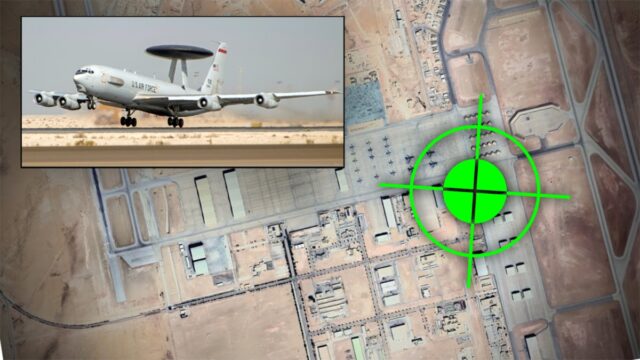
Strategic Blow: Iranian Strike Annihilates E-3 Sentry, Exposing Critical Vulnerabilities in Airborne Command and Control
 Breaking News