
In the complex tapestry of modern air warfare, the ability to see, understand, and direct forces across a vast battlespace is not merely an advantage—it is an existential imperative. At the heart of this capability lies the United States Air Force’s airborne battle management fleet, a collection of highly specialized aircraft designed to serve as the aerial command and control (C2) nodes for air operations. These platforms, often described as the “quarterbacks of the sky,” orchestrate the movements of fighter jets, bombers, reconnaissance assets, and ground forces, providing critical intelligence, surveillance, and reconnaissance (ISR) and maintaining a comprehensive common operating picture (COP). However, beneath the surface of their indispensable utility, this vital fleet is facing an emerging crisis, characterized by an aging inventory, escalating demand, and a looming capacity deficit that threatens to undermine America’s strategic dominance in an increasingly contested global environment.
The foundational elements of this fleet have been the E-3 Sentry Airborne Warning and Control System (AWACS) and the E-8C Joint Surveillance Target Attack Radar System (JSTARS). For decades, these platforms have been the eyes and ears of air commanders, providing unparalleled situational awareness (SA) and battle management capabilities. The E-3 Sentry, built on the venerable Boeing 707 airframe, entered service in the late 1970s and has since become synonymous with airborne C2. Its distinctive rotodome houses a sophisticated pulse-Doppler radar capable of detecting aircraft from low altitudes up into the stratosphere, providing long-range surveillance and tracking of airborne threats. Beyond its radar prowess, the E-3 is a highly integrated C2 platform, equipped with extensive communications suites and an onboard crew of specialists who manage the air picture, direct interceptors, coordinate air refueling, and facilitate air traffic control in combat zones. From the skies over the Persian Gulf during Operation Desert Storm to the persistent air patrols over Afghanistan and Iraq, the E-3 has been a constant presence, enabling air superiority and defense across myriad theaters. Its role extends beyond simple warning; it acts as an airborne command post, guiding strike packages, deconflicting airspace, and providing critical tactical data link connectivity to a wide array of friendly forces.
Complementing the E-3’s aerial focus, the E-8C Joint STARS, based on the Boeing 707-300 series, provides a unique ground surveillance and battle management capability. Entering operational service in the mid-1990s, the E-8C’s AN/APY-7 multimode side-looking radar can detect, locate, and track moving targets on the ground, penetrating foliage and adverse weather conditions. This capability has proven invaluable for supporting ground forces, providing commanders with real-time intelligence on enemy troop movements, vehicle convoys, and missile launchers. JSTARS has been instrumental in dynamic targeting, battle damage assessment, and interdiction missions, effectively bridging the gap between air and land operations. Like the E-3, the E-8C is more than just a sensor platform; its onboard mission crew interprets the radar data, builds a comprehensive ground COP, and disseminates critical information to ground commanders via secure data links. Its deployments have been as persistent as the E-3’s, providing continuous overwatch for ground operations in various Areas of Responsibility (AORs).
However, the very longevity that speaks to the success and utility of these platforms also underpins their current predicament. Both the E-3 and E-8C fleets are built on airframes that are well past their projected service lives. The Boeing 707, a commercial airliner from the 1950s, presents formidable maintenance challenges. Sourcing spare parts for these increasingly rare airframes has become a significant logistical hurdle, driving up maintenance costs and increasing downtime. The avionics and mission systems, while upgraded incrementally over the years, are fundamentally older architectures that struggle to keep pace with the demands of modern network-centric warfare and advanced cyber threats. Moreover, the sheer number of crew members required to operate these complex systems, particularly the E-3’s extensive air battle management team, places a substantial burden on personnel pipelines and operational budgets. The operational tempo (OPTEMPO) has been relentlessly high for decades, with these aircraft and their crews frequently deploying to support combat operations and maintaining persistent presence in strategically vital regions. This constant demand, coupled with dwindling fleet numbers due to age-related attrition and budget constraints, has pushed the existing assets and their dedicated personnel to their breaking point.
The urgency of this situation is exacerbated by a rapidly evolving global threat landscape. The re-emergence of peer and near-peer competitors, particularly China and Russia, presents a fundamentally different challenge than the counter-insurgency operations that dominated the past two decades. These adversaries possess sophisticated integrated air defense systems (IADS), advanced fighter aircraft, and increasingly capable long-range precision strike weapons. Operating in such anti-access/area denial (A2/AD) environments demands an unprecedented level of situational awareness, rapid decision-making, and resilient C2. The contested electromagnetic spectrum, where adversaries actively seek to jam, spoof, and disrupt communications and radar signals, further complicates the mission of airborne battle managers. Traditional, large, and relatively slow platforms like the E-3 and E-8C, while invaluable, can be perceived as high-value targets in such environments, necessitating robust escort and suppression of enemy air defenses (SEAD) operations to ensure their survival and mission effectiveness.
Beyond the challenges posed by peer competitors, regional threats continue to demand persistent airborne battle management. The intricate and volatile security environment of the Middle East, exemplified by the complex air and missile defense capabilities of nations such as Iran, underscores the enduring need for airborne C2. Iran operates a layered air defense network comprising various surface-to-air missile (SAM) systems, including Russian-supplied S-300s, indigenously developed systems, and a range of fighter aircraft. Monitoring this sophisticated network, detecting potential threats, and coordinating defensive and offensive air operations requires constant, vigilant surveillance and expert battle management. An E-3 Sentry provides the critical overhead picture to detect inbound ballistic missiles or cruise missiles, track Iranian fighter movements, and orchestrate the air defense of allied forces and regional partners. Without such persistent airborne C2, the ability to deter aggression, respond effectively to provocations, and ensure the safety of air operations in a complex AOR becomes significantly degraded. The strain of maintaining this presence, often with a limited number of aging aircraft, is immense.
The United States Air Force has recognized this impending crisis and has begun to chart a course for the future of airborne battle management. The most immediate and tangible solution is the acquisition of the E-7 Wedgetail, based on the Boeing 737 Next Generation airframe. Selected in 2023 as the replacement for the E-3 Sentry, the E-7 represents a significant leap forward in capability. The Wedgetail employs the advanced Multi-role Electronically Scanned Array (MESA) radar, offering 360-degree coverage with greater range, sensitivity, and resistance to jamming compared to the E-3’s older radar. Its open-architecture mission system allows for more rapid software upgrades and integration of new technologies, a critical feature for adapting to evolving threats. The E-7 also benefits from the commonality of the 737 airframe, which reduces maintenance costs, simplifies logistics, and improves global supportability compared to the aging 707. Furthermore, its smaller footprint and more efficient engines reduce operational costs and extend loiter times.
However, the transition to the E-7 Wedgetail is not without its challenges. The planned procurement schedule is relatively slow, with initial operational capability not expected until the late 2020s and full replacement of the E-3 fleet stretching well into the 2030s. This protracted timeline creates a “valley of death” scenario, where the existing E-3s must continue to operate under increasing strain while the new fleet slowly comes online. The initial acquisition numbers are also a concern, with fewer E-7s planned than the existing E-3 fleet, raising questions about maintaining adequate global coverage. This necessitates a careful balancing act, extending the life of some E-3s through modernization efforts while simultaneously ramping up E-7 production and integration.
Beyond platform replacement, the Air Force is pursuing a broader, more ambitious vision for future C2 under the umbrella of Joint All-Domain Command and Control (JADC2) and the Advanced Battle Management System (ABMS). JADC2 aims to connect every sensor to every shooter across all domains—air, land, sea, space, and cyber—to accelerate decision-making and achieve information superiority. ABMS is the Air Force’s contribution to JADC2, focusing on developing the digital infrastructure, artificial intelligence (AI) tools, and resilient networking capabilities necessary to achieve this vision. In this future construct, airborne battle management will likely be more distributed and multi-faceted. Dedicated C2 platforms like the E-7 will remain crucial, but they will be augmented by a network of other assets.
For instance, fifth-generation fighters like the F-22 Raptor and F-35 Lightning II, with their advanced sensors, low observable characteristics, and robust data links (like the Multi-Function Advanced Data Link, MADL), are increasingly being viewed as “tactical C2 nodes.” They can collect vast amounts of ISR data, fuse it onboard, and share a highly accurate local air picture with other platforms, reducing reliance on a single, large C2 asset. Manned-unmanned teaming (MUT), where crewed aircraft control loyal wingmen or other uncrewed aerial systems (UAS), will further extend the sensor reach and reduce risk in contested environments. These UAS could carry specialized ISR payloads, acting as forward observers or communication relays, feeding data back to manned C2 platforms or directly to ground forces.
Space-based assets are also poised to play an increasingly significant role in battle management. Satellite constellations can provide persistent, global ISR and communications relay capabilities, offering a resilient alternative or complement to airborne platforms, especially in A2/AD zones where terrestrial and airborne C2 assets might be vulnerable. The integration of commercial space capabilities, such as satellite internet constellations, could also enhance the resilience and bandwidth of military networks. The challenge lies in seamlessly integrating these diverse data streams into a coherent, real-time common operating picture that can be acted upon rapidly by human and AI decision-makers.
The retirement of the E-8C JSTARS fleet further complicates the ground battle management picture. While the Air Force plans to distribute its capabilities across a network of platforms, including the E-7, new ground-moving target indicator (GMTI) payloads on UAS, and enhanced space-based surveillance, the immediate loss of JSTARS’ dedicated, robust, and crew-intensive ground battle management capability creates a gap. The transition relies heavily on the maturation and integration of these disparate systems, a process that will take time and significant investment. The risk of losing the nuanced, human-driven analysis and dynamic targeting expertise resident in the JSTARS crew during this transition period is a concern for ground force commanders.
Ultimately, the crisis facing America’s airborne battle management fleet is a microcosm of the broader challenges confronting the Department of Defense: how to modernize critical capabilities while simultaneously maintaining global presence and readiness against a diverse array of threats. The decision to invest in the E-7 Wedgetail is a step in the right direction, but its slow fielding and limited numbers require careful management of the legacy fleet and accelerated development of JADC2 components. The imperative to integrate diverse platforms—from sophisticated new aircraft to space-based sensors and AI-driven decision aids—is paramount. The future of airborne battle management will not be a single platform but a resilient, distributed network, capable of operating effectively across all domains and in the face of sophisticated adversary attempts to deny, degrade, and disrupt.
The implications of failing to adequately address this looming crisis are profound. A degraded airborne battle management capability would directly impact the ability of the United States to project power, deter aggression, and effectively conduct multi-domain operations. It would lengthen decision cycles, reduce situational awareness, increase risk to allied forces, and potentially cede the advantage in critical operational theaters. Maintaining air superiority, orchestrating complex strike packages, defending against advanced missile threats, and supporting ground forces all hinge upon robust, resilient, and technologically superior airborne C2. The coming decade will be a critical period for the Air Force as it navigates this challenging transition, balancing the immediate demands of global security with the urgent need to modernize the very backbone of its airpower.
More From Air Force
 Air Force
Air Force Forges New Path: COVID-19 Vaccine Separation Records Rectified, Streamlined Reinstatement Program Unveiled
 Air Force
B-2 Spirits Deploy with Enigmatic Wing Modifications, Hinting at Evolving Strategic Capabilities
 Air Force
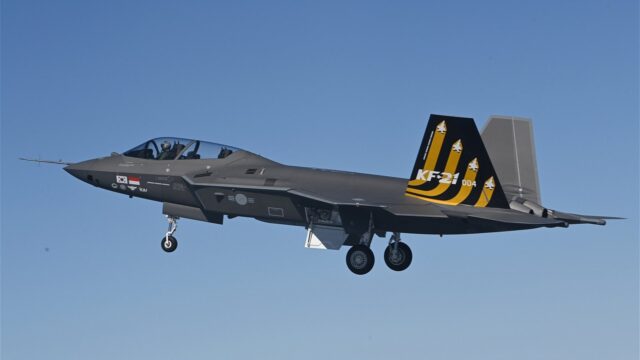
KF-21 Boramae Transitions to Production, Solidifying South Korea's Advanced Airpower Autonomy
 Air Force