
The forward deployment of a substantial contingent of A-10C Thunderbolt II attack aircraft, commonly known as the “Warthog,” to a critical operational theater signifies a pronounced strategic recalibration by the United States military. This maneuver underscores a heightened state of readiness for potential large-scale ground operations, particularly amid escalating geopolitical tensions in the Middle East. The venerable A-10, renowned for its unparalleled close air support (CAS) capabilities and robust survivability, remains an irreplaceable asset for forces engaging in direct ground combat, signaling a clear intent to provide overwhelming air-to-ground firepower should such contingencies arise.
Conceived during the Cold War to counter Soviet armor columns on the plains of Europe, the A-10 Thunderbolt II is a testament to mission-specific design. Its very existence is predicated on the principle of effective, durable, and precise close air support for ground troops. Unlike multi-role fighter aircraft designed for air-to-air engagements and a broader spectrum of air-to-ground missions, the A-10 is a dedicated ground attack platform, optimized for low-altitude, low-speed maneuverability, extended loiter times, and the ability to operate from austere forward operating locations.
At the heart of the A-10’s formidable reputation lies the GAU-8/A Avenger Gatling gun. This 30mm, seven-barrel rotary cannon is one of the most powerful aircraft cannons ever fielded, capable of firing up to 3,900 rounds per minute. Its ammunition, primarily depleted uranium armor-piercing incendiary (AP-I) rounds, can devastate main battle tanks, armored personnel carriers, and fortified positions with kinetic energy penetrators. The sheer volume and destructive power of the GAU-8 are often described by ground troops as the “sound of freedom,” a distinctive, guttural roar that signals immediate, decisive air support. The gun is so integral to the aircraft’s design that the airframe was effectively built around it, with the landing gear offset to accommodate the barrel.
Beyond its iconic cannon, the A-10 carries a diverse arsenal on its eleven external hardpoints. This includes AGM-65 Maverick air-to-ground missiles, highly effective against tanks, bunkers, and other hardened targets; Hydra 70 unguided rockets for area suppression; and a variety of precision-guided munitions such as GBU-38 Joint Direct Attack Munitions (JDAMs) and GBU-12 Paveway II laser-guided bombs. Modernized A-10C variants are equipped with advanced targeting pods, such as the LITENING or Sniper Advanced Targeting Pods, enhancing their ability to identify, track, and engage targets with pinpoint accuracy in all weather conditions, day or night, significantly reducing the risk of collateral damage and friendly fire.
The A-10’s design philosophy places a premium on pilot survivability and battlefield resilience. The cockpit is encased in a “titanium bathtub” weighing over 1,200 pounds, providing protection against ground fire up to 23mm rounds. Redundant hydraulic flight control systems, backed by a manual reversion system, ensure the aircraft can return to base even after sustaining significant damage. Its twin General Electric TF34 turbofan engines are mounted high on the fuselage, shielding them from ground fire and allowing the aircraft to operate even if one engine is disabled. This inherent ruggedness enables the Warthog to absorb battle damage that would cripple other aircraft, a critical attribute for missions conducted in contested, low-altitude airspace.
The strategic importance of the A-10 in supporting ground forces has been repeatedly validated across multiple conflicts since its introduction. During Operation Desert Storm in 1991, A-10s flew over 8,100 sorties, achieving an 85% mission-capable rate and destroying approximately 900 Iraqi tanks, 1,200 artillery pieces, and 2,000 other military vehicles. Their ability to loiter over the battlefield, identify targets, and engage with precision was instrumental in dismantling Iraqi armored divisions. They also played a crucial role in combat search and rescue (CSAR) operations, providing protective cover for downed pilots.
In the asymmetric conflicts of Afghanistan and Iraq, the A-10 proved indispensable. Its robust airframe and extensive loiter time made it ideal for supporting troops in contact against insurgents, providing “danger close” CAS in complex urban environments and rugged mountainous terrain. Pilots often flew multiple sorties per day, providing persistent overhead presence, suppressing enemy fire, and delivering ordnance with surgical precision to protect ground forces engaged in close-quarters combat. The ability of A-10 pilots to communicate directly and effectively with Joint Terminal Attack Controllers (JTACs) on the ground, often serving as forward air controller-airborne (FAC-A) assets, has been a cornerstone of its operational success, ensuring seamless air-ground integration.
More recently, A-10s have been heavily engaged in operations against ISIS in Iraq and Syria, where they continued to demonstrate their effectiveness against vehicle convoys, fortified positions, and personnel. Their unique combination of firepower, precision, and endurance made them a preferred asset for commanders seeking reliable and responsive air support in a dynamic battlespace.
The current forward deployment of A-10Cs signals a deliberate and serious preparation for potential ground-intensive operations. Unlike air superiority fighters or strategic bombers, whose primary roles are air dominance or long-range strike, the A-10’s presence is a clear indicator of intent to support forces directly engaged on the ground. This move suggests that military planners are anticipating a scenario where ground troops will require sustained, accurate, and resilient air cover against a variety of threats, potentially including conventional armored formations, fortified positions, and dispersed irregular forces.
In a conflict scenario involving a regional power like Iran, the A-10’s anti-armor capabilities would be critically important. While Iranian conventional forces may not possess the most advanced armored divisions, they do maintain a significant number of tanks, armored vehicles, and artillery pieces that would pose a threat to ground forces. The A-10’s GAU-8 and Maverick missiles are specifically designed to neutralize such threats, providing a distinct advantage in any ground engagement.
Furthermore, potential ground operations in the region could involve complex urban terrain and mountainous areas. In such environments, the A-10’s low-speed maneuverability, exceptional visibility from its bubble canopy, and ability to operate at lower altitudes become invaluable. It allows pilots to visually acquire and identify targets amidst cluttered environments, reducing the risk of engaging non-combatants or friendly forces. The precision targeting capabilities of modern A-10Cs, coupled with the expertise of highly trained JTACs, enable the delivery of ordnance with surgical accuracy, minimizing collateral damage, a critical consideration in densely populated areas.
The extended loiter time of the A-10 provides a persistent presence over the battlefield, allowing it to remain on station for hours, ready to respond to emergent threats or provide continuous overhead protection. This endurance is a significant advantage over faster, less fuel-efficient aircraft that must depart the area more frequently for refueling, leaving ground forces temporarily without dedicated CAS. The psychological impact of the A-10’s presence, both on friendly forces and adversaries, cannot be overstated. For troops on the ground, the sight and sound of the Warthog provide an immense morale boost, a clear sign that powerful air support is just moments away. For adversaries, the distinct silhouette and aggressive profile of the A-10 serve as a potent deterrent, a harbinger of overwhelming firepower.
Regarding adversary air defenses, while modern integrated air defense systems (IADS) pose a significant threat to all aircraft, the A-10 is specifically designed to operate in environments where lower-tier threats, such as anti-aircraft artillery (AAA), small arms fire, and man-portable air-defense systems (MANPADS), are prevalent. Its robust construction and redundant systems allow it to absorb hits and continue its mission, a capability unmatched by more fragile, high-performance aircraft. In a layered air defense environment, A-10s typically operate after initial suppression of enemy air defenses (SEAD) operations have cleared the way for their specific mission profile.
The deployment of A-10s also underscores the meticulous planning for joint force integration. These aircraft would operate seamlessly within a broader air campaign, complementing stealth fighters like the F-22 and F-35 (which would establish air superiority and execute deep penetration strikes), long-range bombers (for strategic interdiction), and intelligence, surveillance, and reconnaissance (ISR) platforms (for battlefield awareness and targeting data). The A-10’s role would be highly specialized, focusing on the kinetic engagement of targets directly threatening ground forces, often within the “danger close” parameters.
Logistically, the A-10’s design for ease of maintenance and its ability to operate from semi-prepared forward operating bases (FOBs) enhance its responsiveness. Its relatively simple systems compared to fifth-generation fighters mean quicker turnaround times and higher sortie rates, crucial for sustaining continuous air support in a high-tempo operational environment. This logistical flexibility allows for the rapid establishment of air support closer to the front lines, reducing transit times and increasing time on station.
The timing of this deployment is particularly salient given the ongoing debate within the United States Air Force regarding the A-10’s future. For years, the Air Force has sought to retire the fleet, arguing that its capabilities could be replicated by multi-role fighters and that resources should be reallocated to modern platforms. However, congressional support, coupled with the consistent demonstration of the A-10’s unique and irreplaceable value in various conflicts, has repeatedly deferred its retirement. This latest deployment serves as a powerful, tangible argument for the Warthog’s enduring relevance. It demonstrates that despite advancements in technology and the advent of stealth aircraft, no other platform currently matches the A-10’s specific combination of attributes for close air support, particularly in scenarios involving sustained ground combat against a well-equipped adversary. The cost-per-sortie, loiter time, and pilot survivability in a ground-threat environment remain compelling arguments for its continued operational utility.
In conclusion, the forward deployment of a significant number of A-10C Thunderbolt IIs is more than just a routine rotation of assets; it is a clear strategic signal. It reflects a serious escalation in military posture, indicating that military planners are actively preparing for contingencies that could involve substantial ground force engagement. This move is a powerful message of resolve, demonstrating the United States’ capability and willingness to provide overwhelming, dedicated close air support to its ground forces in any potential conflict. It underscores the enduring and often underestimated value of specialized platforms like the A-10 in an era dominated by multi-role stealth aircraft. The Warthog, a relic of the Cold War, continues to prove its irreplaceable worth as a critical arrow in the quiver for complex, ground-centric contingencies, reminding all observers that when ground troops are in contact, the specialized might of the A-10 is often the most desired and decisive form of aerial intervention.
More From Air Force
 Air Force
Army Unleashes Autonomous Future with First H-60Mx Optionally Piloted Black Hawk Delivery
 Air Force
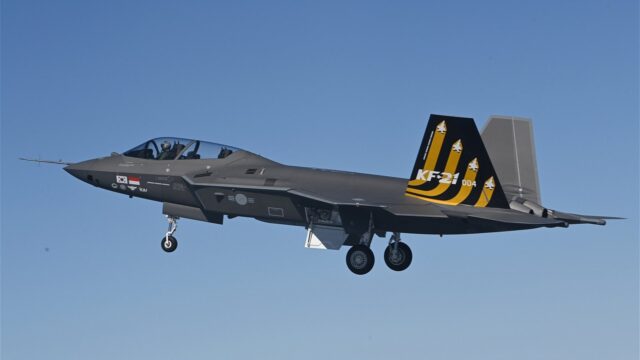
KF-21 Boramae Transitions to Production, Solidifying South Korea's Advanced Airpower Autonomy
 Air Force
Air Refueling: The Indispensable Arteries of Global Power Projection
 Air Force