The geopolitical landscape of the Persian Gulf, perpetually fraught with strategic complexities and the specter of kinetic conflict, has been further complicated by a recent assertion from the highest echelons of the United States government. The US President has publicly claimed that the Islamic Republic of Iran has initiated contact, seeking to negotiate a resolution to the protracted standoff that has defined the relationship between Washington and Tehran for decades. This declaration, however, was met with an immediate and categorical denial from Iranian authorities, igniting a fresh debate over the true state of play in a region already balancing precariously on the precipice of broader hostilities. This exchange of claims and counter-claims underscores the profound distrust, the intricate web of strategic signaling, and the ever-present information warfare that characterizes the current US-Iran dynamic.
The context for such a significant claim is rooted in an extended period of heightened tension, economic coercion, and calibrated military posturing. Following the US withdrawal from the Joint Comprehensive Plan of Action (JCPOA) in May 2018, the Trump administration embarked on a “maximum pressure” campaign designed to compel Iran to renegotiate a more comprehensive nuclear agreement, address its ballistic missile program, and cease its perceived destabilizing regional activities. This campaign involved the reimposition of stringent economic sanctions, targeting Iran’s vital oil exports, its financial sector, and key industrial components. The stated objective was to deny the Iranian regime the revenue streams necessary to fund its military ambitions and support its network of regional proxy forces, thereby forcing a change in behavior or, implicitly, a collapse of the regime.
Iran’s initial response to the maximum pressure campaign was characterized by a period of “strategic patience,” hoping that European signatories to the JCPOA could provide sufficient economic relief to offset US sanctions. When this relief largely failed to materialize, Tehran shifted its strategy towards a “calibrated escalation,” designed to demonstrate its resolve, increase the costs of the US policy, and pressure the international community to intervene. This phase saw a series of incidents that dramatically ratcheted up tensions across the Persian Gulf theater. These included attacks on commercial shipping in the Gulf of Oman, often attributed to Iranian forces or their proxies, utilizing limpet mines and other asymmetric tactics. The targeting of oil tankers, critical nodes in the global energy supply chain, served as a stark reminder of Iran’s capacity to disrupt maritime commerce through the Strait of Hormuz, a vital chokepoint through which a significant portion of the world’s seaborne oil transits daily.
Further escalation manifested in the downing of a US Navy RQ-4 Global Hawk high-altitude, long-endurance unmanned aerial vehicle (UAV) by an Iranian surface-to-air missile system in June 2019. Iran maintained the drone had violated its airspace, a claim vehemently denied by the US, which asserted the UAV was operating in international airspace. This incident brought the two nations to the brink of direct military confrontation, with the US President reportedly calling off retaliatory strikes at the last moment. The most brazen act of calibrated escalation, however, occurred in September 2019, with sophisticated drone and cruise missile attacks on Saudi Arabia’s Abqaiq and Khurais oil processing facilities. While Houthi rebels in Yemen, an Iranian proxy, claimed responsibility, US and Saudi intelligence assessments pointed squarely to Iran as the perpetrator, citing the complexity and trajectory of the attacks. These events, coupled with ongoing tensions in Iraq, Syria, and Yemen, where US and Iranian interests frequently clash through proxy forces, established a highly volatile operational environment.
Against this backdrop of sustained economic warfare and periodic kinetic exchanges, the US President’s claim of Iranian diplomatic outreach introduces a layer of profound ambiguity. If true, it would signal a potential shift in Tehran’s strategic calculus, suggesting that the maximum pressure campaign might be achieving its intended effect of forcing the regime to seek a de-escalatory path. Such an overture, if genuinely made, would likely stem from the severe strain on Iran’s economy, which has crippled its ability to import essential goods, devalued its currency, and fueled domestic discontent. The prospect of further economic deterioration, coupled with the ever-present threat of direct military confrontation with the US and its regional allies, could conceivably compel even the most hardline elements within the Iranian leadership to explore diplomatic avenues. For a regime that prides itself on resistance and defiance, initiating direct communication, especially after publicly vowing never to negotiate under duress, would represent a significant concession and a pragmatic acknowledgement of the economic realities.
However, Iran’s immediate and emphatic denial complicates this narrative. From Tehran’s perspective, admitting to seeking negotiations under the current conditions of maximum pressure would be tantamount to capitulation. Such an admission would undermine the regime’s carefully cultivated image of steadfastness and resilience, both domestically and among its regional allies and proxies. It could embolden internal dissent, suggesting weakness in the face of external pressure, and potentially fracture the delicate balance of power between hardliners and pragmatists within the Islamic Republic. Furthermore, publicly denying such an overture allows Iran to maintain its bargaining position, should actual negotiations materialize, and prevents the US from claiming a propaganda victory for its maximum pressure strategy. The denial itself could be a strategic maneuver, a form of information warfare designed to project strength and unity, while potentially exploring back channels or indirect mediation.
The historical relationship between the US and Iran is replete with instances of covert dialogue, failed negotiations, and strategic miscalculation, all occurring against a backdrop of public animosity. Following the 1979 Islamic Revolution and the subsequent hostage crisis, direct diplomatic ties were severed. Yet, even during periods of intense hostility, such as the Iran-Iraq War where the US ostensibly supported Iraq, covert channels were sometimes used, as evidenced by the Iran-Contra affair. The “Axis of Evil” designation by the George W. Bush administration further cemented Iran’s isolation, but even then, indirect engagement occurred on specific regional issues, such as Afghanistan and Iraq. The Obama administration’s diplomatic outreach, culminating in the JCPOA, marked a significant, albeit temporary, departure from this pattern, demonstrating that sustained, multi-lateral negotiations were possible, even with a deeply distrustful adversary. The current situation, however, lacks the multilateral framework of the JCPOA and is dominated by unilateral US pressure.
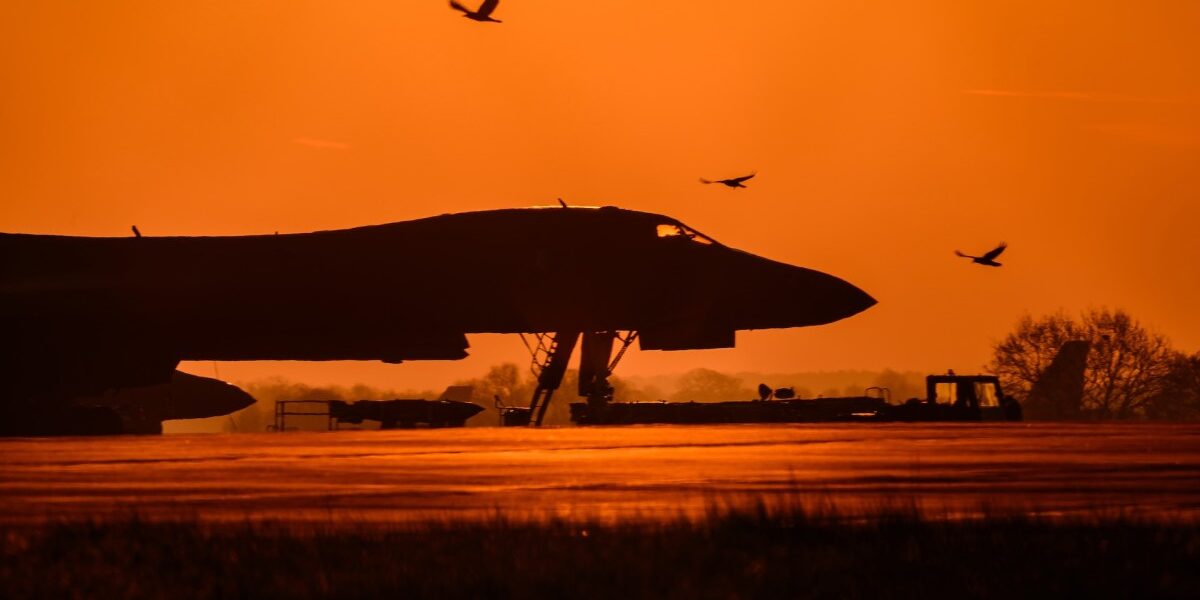
From a military perspective, the US maintains a robust force posture across the United States Central Command (CENTCOM) Area of Responsibility (AOR), designed to deter aggression, protect US interests, and assure regional allies. The US Fifth Fleet, headquartered in Bahrain, operates continuously in the Persian Gulf, Strait of Hormuz, and Arabian Sea, conducting maritime security operations, freedom of navigation patrols, and anti-mine warfare exercises. This naval presence includes carrier strike groups (CSGs) and expeditionary strike groups (ESGs), deploying advanced naval aviation assets such as F/A-18 Super Hornets, along with guided-missile destroyers and cruisers equipped with Aegis combat systems. Air Expeditionary Forces (AEFs) are regularly deployed to regional airbases, comprising advanced fighter aircraft such as F-15E Strike Eagles, F-16 Fighting Falcons, and more recently, F-22 Raptors and F-35 Lightning IIs, providing air superiority, strike, and interdiction capabilities. Strategic bombers, including B-52 Stratofortresses and B-1B Lancers, have also conducted visible deterrence flights through the region, signaling long-range power projection capabilities. These forces are augmented by extensive Intelligence, Surveillance, and Reconnaissance (ISR) assets, including U-2 Dragon Lady, RQ-4 Global Hawk, and RC-135 Rivet Joint aircraft, providing critical battlespace awareness.
Iran, recognizing its conventional military inferiority compared to the US, has meticulously developed an asymmetric warfare doctrine. The Islamic Revolutionary Guard Corps Navy (IRGCN) operates a fleet of fast attack craft, mini-submarines, and suicide boats, designed to swarm larger vessels and leverage the confined geography of the Persian Gulf for area denial. Iran’s naval mines also pose a significant threat to maritime navigation. Crucially, Iran possesses a substantial ballistic and cruise missile arsenal, including the Shahab, Ghadr, and Sejjil series, capable of striking targets across the region, including US bases and allied infrastructure. Recent developments indicate an increased focus on precision-guided munitions (PGMs), as demonstrated by the Abqaiq-Khurais attacks and the retaliatory missile strikes against US forces at Ain al-Asad airbase in Iraq following the targeted killing of Qassem Soleimani. Iran’s drone program has also matured significantly, with various UAV types like the Shahed and Ababil series used for ISR, target acquisition, and direct attack. Its air defense capabilities, bolstered by Russian S-300 PMU2 systems and indigenous developments, aim to complicate potential aerial incursions. Furthermore, Iran’s cyber warfare capabilities are considered robust, posing a threat to critical infrastructure and military networks.
The deployment of these military assets by both sides creates a highly volatile operational environment where miscalculation or accidental engagement could rapidly escalate into a broader conflict. Rules of engagement (ROE) are meticulously crafted but remain subject to interpretation in the heat of contact. The Strait of Hormuz remains a critical flashpoint, with frequent encounters between US naval vessels and IRGCN patrols. Any perceived attempt to close the strait by Iran would likely trigger a robust international military response.
The regional implications of this US-Iran diplomatic dance are profound. US allies in the Gulf Cooperation Council (GCC) – Saudi Arabia, the United Arab Emirates, Bahrain, Kuwait, and Qatar – are deeply invested in the outcome. They seek a stable regional security architecture that mitigates Iranian influence and protects their vital interests. While generally aligned with the US maximum pressure campaign, the prospect of direct US-Iran conflict is a significant concern for these nations, given their proximity to potential battle zones and their reliance on secure maritime routes for oil exports. Some GCC states have, at various times, explored their own limited dialogue with Tehran to de-escalate tensions. Israel, another key US ally, views Iran’s nuclear program, ballistic missile development, and support for groups like Hezbollah as existential threats. It maintains its own “campaign between wars,” conducting kinetic operations against Iranian and proxy targets in Syria and elsewhere, irrespective of broader US-Iran diplomatic signals.
The current situation also highlights the critical role of information operations and psychological warfare. The US President’s claim, regardless of its veracity, serves multiple purposes: it can be interpreted as a validation of the maximum pressure strategy, designed to sow discord within the Iranian leadership, or as an overture to signal US willingness to engage, even while maintaining pressure. Iran’s denial, conversely, reinforces its narrative of defiance and resilience against what it perceives as US imperialist aggression. In this high-stakes geopolitical chess match, every public statement, every military maneuver, and every diplomatic signal is carefully weighed for its strategic impact on both domestic and international audiences. The battle for perception is as critical as any kinetic engagement.
In conclusion, the US President’s assertion of Iranian diplomatic overtures, met with immediate and forceful denial by Tehran, marks a significant inflection point in an already complex and dangerous standoff. Whether a genuine back-channel communication occurred or if the claim itself constitutes a strategic information operation, the episode underscores the immense pressure bearing down on the Iranian regime and the persistent, if often indirect, desire for a de-escalatory path by various actors. The military posture of both the United States and Iran remains critical, with advanced capabilities arrayed across the Persian Gulf theater, creating an ever-present risk of miscalculation. The implications of this diplomatic flashpoint are far-reaching, impacting regional security architecture, the stability of global energy markets, and the delicate balance of power in the Middle East. The strategic uncertainty generated by such conflicting narratives ensures that the region remains a powder keg, where calibrated signals and careful management of the escalation ladder are paramount to preventing broader conflict.
More From Breaking News
 Breaking News
Ukraine Navigates Dual Crises as Deepening Iran War Drains Western Air Defenses Amid Russia's Persistent Offensive
 Breaking News
Kyiv's Crucible: Ukraine Forges Next-Generation Counter-UAS Doctrine Amidst Conflict, Eyeing Global Defense Markets
 Breaking News
Kyiv's Strategic Energy Campaign: Unpacking the Economic Fallout of Deep Strikes on Russian Oil and Gas Infrastructure
 Breaking News